




Key Takeaways
AI Overviews now appear on a meaningful share of Google searches, concentrated heavily on informational queries rather than transactional ones.
The large majority of pages cited inside AI Overviews are already ranking in the top 10 organic results; this is a layer on top of classic SEO, not a replacement for it.
Cited answer blocks tend to run short and self-contained, closer to 100-150 words, not long preambles.
EEAT (Experience, Expertise, Authoritativeness, Trustworthiness) has moved from a minor ranking signal to the primary filter AI systems use to decide what to cite.
Structured data, direct-answer formatting, and original data are the three highest-leverage technical changes you can make this quarter.
If you've seen your website traffic from search engines act a bit off in 2026, you're probably right. Google's AI Overviews the AI-generated summaries that show up at the top of search results have changed how people find information, who gets recognized for it, and who gets skipped entirely.
The old playbook targeting a keyword, collecting a few backlinks still matters, but it's no longer sufficient on its own. AI Overviews don't just pull from whichever page ranks highest. They assemble an answer from sources the system judges to be trustworthy, accurate, and well-structured. That's a different game, and it runs on EEAT.
What Are Google AI Overviews?
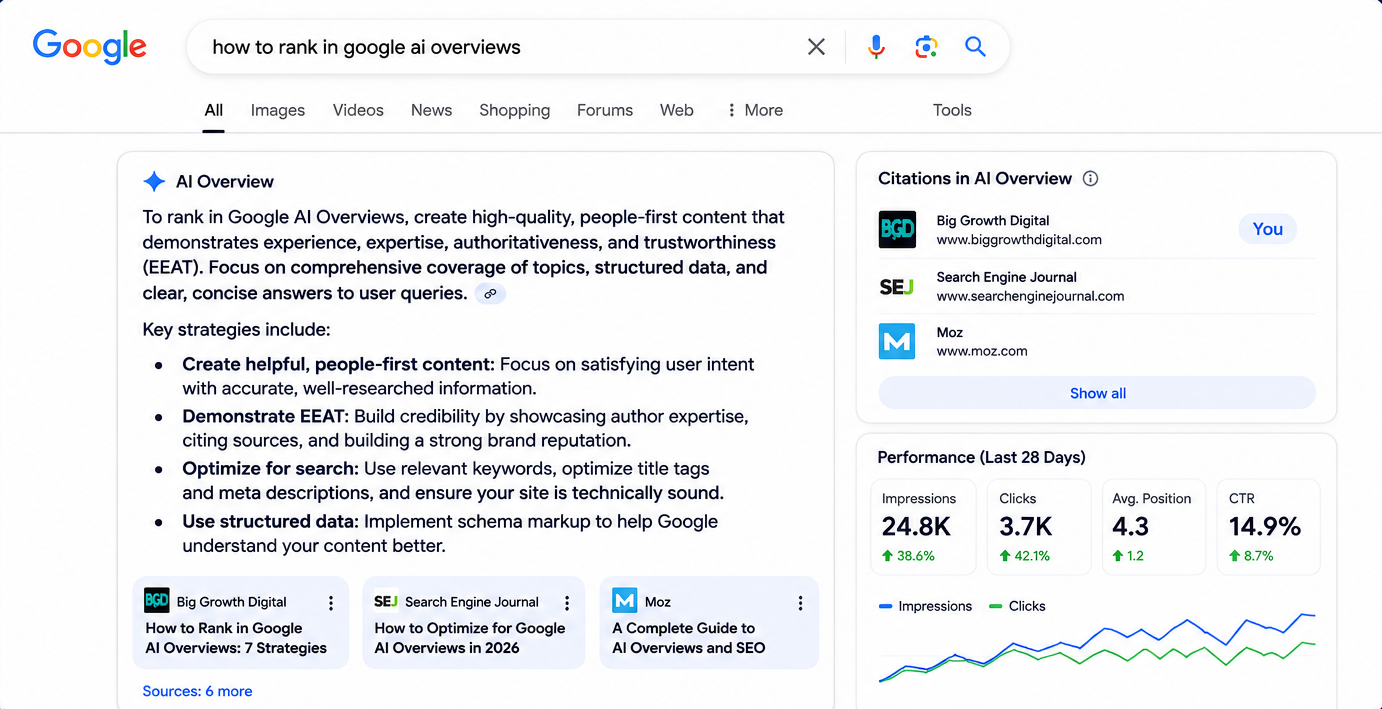
Google AI Overviews are AI-generated summaries displayed at the top of search results. Instead of showing only the traditional list of blue links, Google combines information from multiple sources it considers credible to answer a query directly, while citing the sites the answer was built from.
They officially expanded in 2024 and have become common for research-based, comparison, and "how to" style queries. Unlike the older single-source featured snippet, an AI Overview typically synthesizes from several pages at once and links out to each one as a citation chip.
Why AI Overviews Demand a Higher Standard of Content
AI Overviews aren't a cosmetic change to the results page; they're a structural shift in how people interact with search. Instead of clicking through, users increasingly get an AI-synthesized answer at the top, sometimes without visiting a site at all. Getting cited inside that answer is the new version of ranking #1.
The tension is real: for generic informational content, AI Overviews create a genuine zero-click risk. But for content that clearly signals EEAT, they create outsized visibility your brand appears prominently without the user even needing to scroll. Independent research backs this up:
The large majority of URLs cited in AI Overviews already rank in the top 10 of organic search. The AI layer builds on classical SEO rather than bypassing it.
Cited answer blocks tend to be short and self-contained, in the range of roughly 90-150 words depending on device, not long lead-ins.
Reddit and YouTube consistently rank among the most-cited domains across AI Overviews, alongside Wikipedia and brand-owned content meaning your off-site presence matters almost as much as your blog.
Research tracking user behavior found people click through to a traditional result noticeably less often when an AI summary is present, but pages that are cited see a real lift in trust and engagement compared to their pre-AI-Overview baseline.
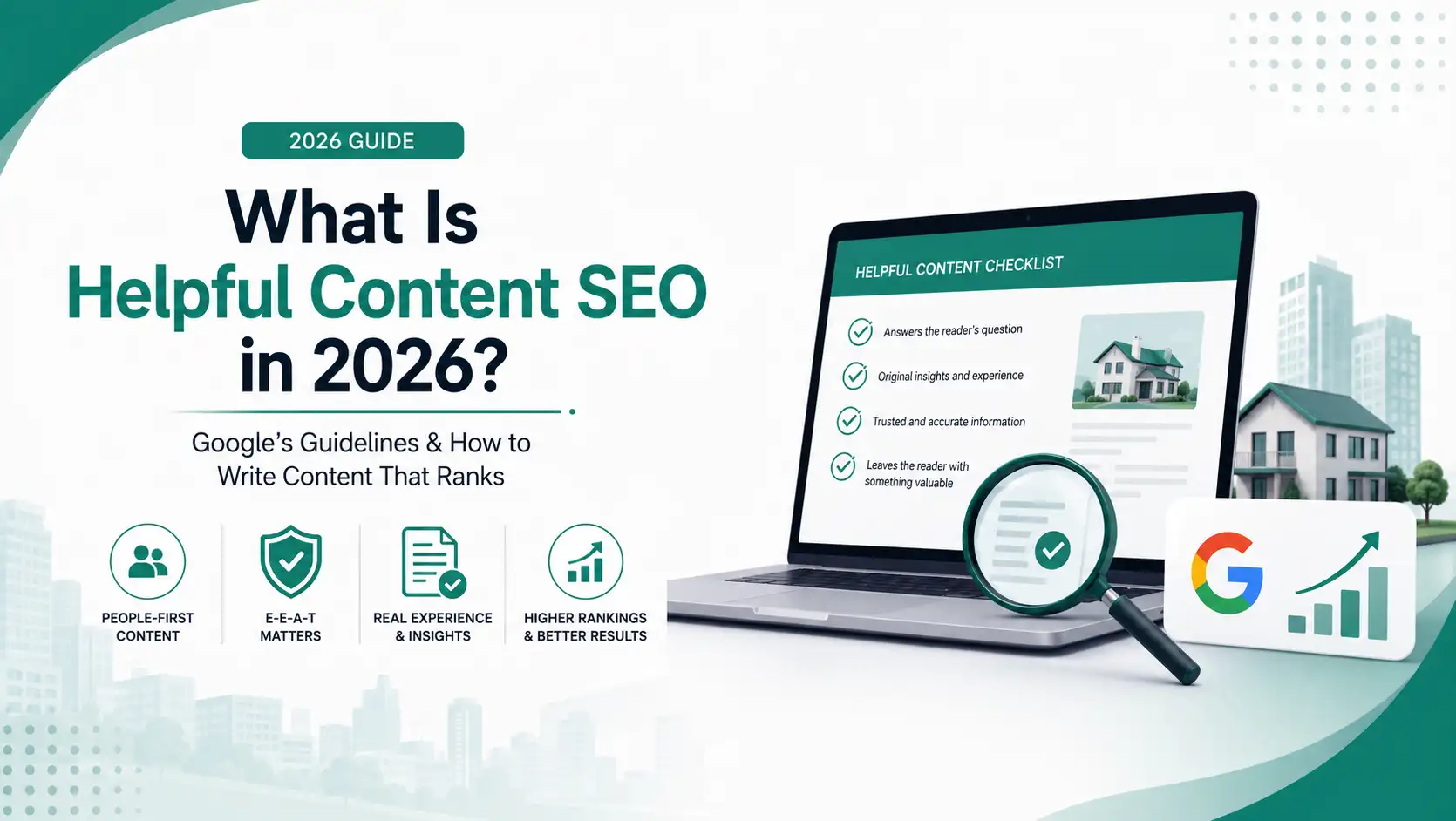
EEAT stands for Experience, Expertise, Authoritativeness, and Trustworthiness. Google has had this in its quality guidelines for years, but with AI Overviews it stopped being a minor point and became the primary filter for what gets cited.
Traditional SEO vs. AI Overview SEO
Traditional SEO | AI Overview SEO |
Focus on rankings | Focus on citations |
Keywords first | EEAT signals first |
Backlinks as primary authority signal | Authority + clean structure together |
Long introductions | Direct, self-contained answers |
Optimize one page | Optimize a topic cluster |
Text-only content | Text + structured data + video/image coverage |
7 Content Strategies That Work in 2026
1. Lead With Lived Experience, Not Just Information
The first E in EEAT Experience is about demonstrating that a real person with real context created the content. First-hand experience and scenario-specific insight often make content more distinctive and can strengthen EEAT signals compared to generic summaries assembled from other summaries.
Add an "I tested this" section. Include data from your own workflows. Cite your own research where you have it. Thin, aggregated content that reads like a roundup of other roundups is exactly what gets filtered out. Show the work.
2. Make Authorship Radically Transparent
Google's quality evaluators want to verify who wrote a piece and why they're qualified to write it. A byline with just a name is no longer enough. Build out real author bio pages with credentials, publication history, and links to LinkedIn or other professional profiles. If content is published under a company name rather than a person's, assign a named editorial contributor. Author-level transparency is now an SEO asset, not just a trust nicety.
3. Structure Content to Answer, Then Expand
AI Overviews pull concise, well-structured passages from longer pages. If the answer is buried in paragraph five, it won't get selected. Lead every section with a direct answer to the implied question, then expand with context and evidence below an inverted pyramid within every H2. Use FAQ-style formatting, short-answer summaries near the top of long guides, and clearly labeled sections. Give the system a clean passage to extract, not a wall of text to interpret.
4. Cite Primary Sources Consistently
Authoritative content cites authoritative sources. Link to peer-reviewed studies, government data, official documentation, and named industry research not just other blogs summarizing the same study. Better still: run your own small survey, interview a practitioner, or publish original data from your own operations. When you're the primary source, AI systems have no one else to cite instead of you.
5. Use Structured Data to Speak Google's Language
Structured data (schema markup) has always mattered for rich results. In the AI Overview era it matters more it gives Google unambiguous signals about what a page is, who wrote it, when it was updated, and what it covers.
Use Article, FAQ, and HowTo schema where relevant, and make sure structured data includes author, dateModified, and publisher fields. Entities worth including naturally across your content: Google Search Console, Schema.org, the Google Knowledge Graph, and Google's Helpful Content System these are the concepts AI systems associate with well-optimized content, and referencing them accurately builds topical relevance.
6. Build Topical Authority Through Content Clusters
Google evaluates authority at the domain and topic-cluster level, not just the single page. One excellent article on a subject you've never otherwise covered is less likely to earn a citation than a well-networked piece inside a comprehensive cluster you've built over time. Map content into pillar pages with deep supporting articles, covering a topic from beginner to advanced, conceptual to tactical. Depth signals authority; breadth signals comprehensiveness AI systems reward both.
7. Refresh Content on a Deliberate, Documented Cadence
Trustworthiness decays. A guide published two years ago and never revisited signals neglect, not authority AI Overviews weight recency heavily for time-sensitive queries and freshness for evergreen ones. Set up a quarterly review process for your highest-traffic pages. When you update, add a visible "Last reviewed" date and a short note on what changed, and reflect that in your schema's dateModified field.
AI Overview Optimization Checklist
Clear, question-shaped H1 and H2s
Direct answer within the first 1-3 sentences under every H2
Author bio with credentials and a linked professional profile
Visible "last reviewed" date
FAQ and Article schema implemented
At least one piece of original data, testimony, or first-hand experience
Internal links to related cluster content
Primary-source citations (not just secondary roundups)
Statistics updated within the last 12-18 months
The Bottom Line
AI Overviews don't reward the loudest content, they reward the clearest, most trustworthy answers. The sites earning citations in 2026 aren't simply publishing more; they're publishing content that demonstrates real expertise, provides evidence, and solves the reader's problem better than the alternative. Start with the one strategy above that exposes the biggest gap in your current content, and close it with intention. The AI is watching, but more importantly, so are your readers building for them first, and the citations follow.
FAQs
Q. Do I need to rank on page one to appear in an AI Overview?
Not necessarily. AI Overviews pull from sources Google considers credible and well-structured, which can include pages outside the top three or even the first page if their EEAT signals are strong. That said, overall page authority still helps, so strong rankings plus strong EEAT give the best combined chance of citation.
Q. Will appearing in an AI Overview actually drive traffic to my site?
It depends on the query. For complex or comparative questions, users frequently click through to a cited source for more detail. For simple factual queries, less so. The consistent benefit is brand exposure and perceived authority being cited by Google's AI builds trust even without an immediate click.
Q. How quickly can EEAT improvements affect visibility in AI Overviews?
Not instantly. Most teams see meaningful movement over one to three months. Technical changes like schema markup tend to show up faster; topical authority and author reputation take longer to compound. Treat EEAT as infrastructure, not a quick fix.
Q. Is AI-generated content penalized in AI Overviews?
Google has been clear that it isn't inherently anti-AI content, it's anti-low-quality content. AI-assisted writing that's fact-checked, enriched with real expertise, and clearly attributed to a responsible author can perform well. AI-generated content with no original insight or first-hand experience struggles regardless of how it was produced.
Q. What type of content appears most often in Google AI Overviews?
Informational and comparison-style queries "how to," "what is," and "X vs Y" formats trigger AI Overviews far more often than transactional searches. If your content answers a specific question directly and early, it's a stronger candidate than a generic landing page.
Q. Does schema markup actually help AI Overviews?
Yes, indirectly but meaningfully. Schema doesn't guarantee a citation, but it gives Google's systems unambiguous signals about authorship, structure, and freshness all of which feed into the trust judgment that determines what gets cited.