




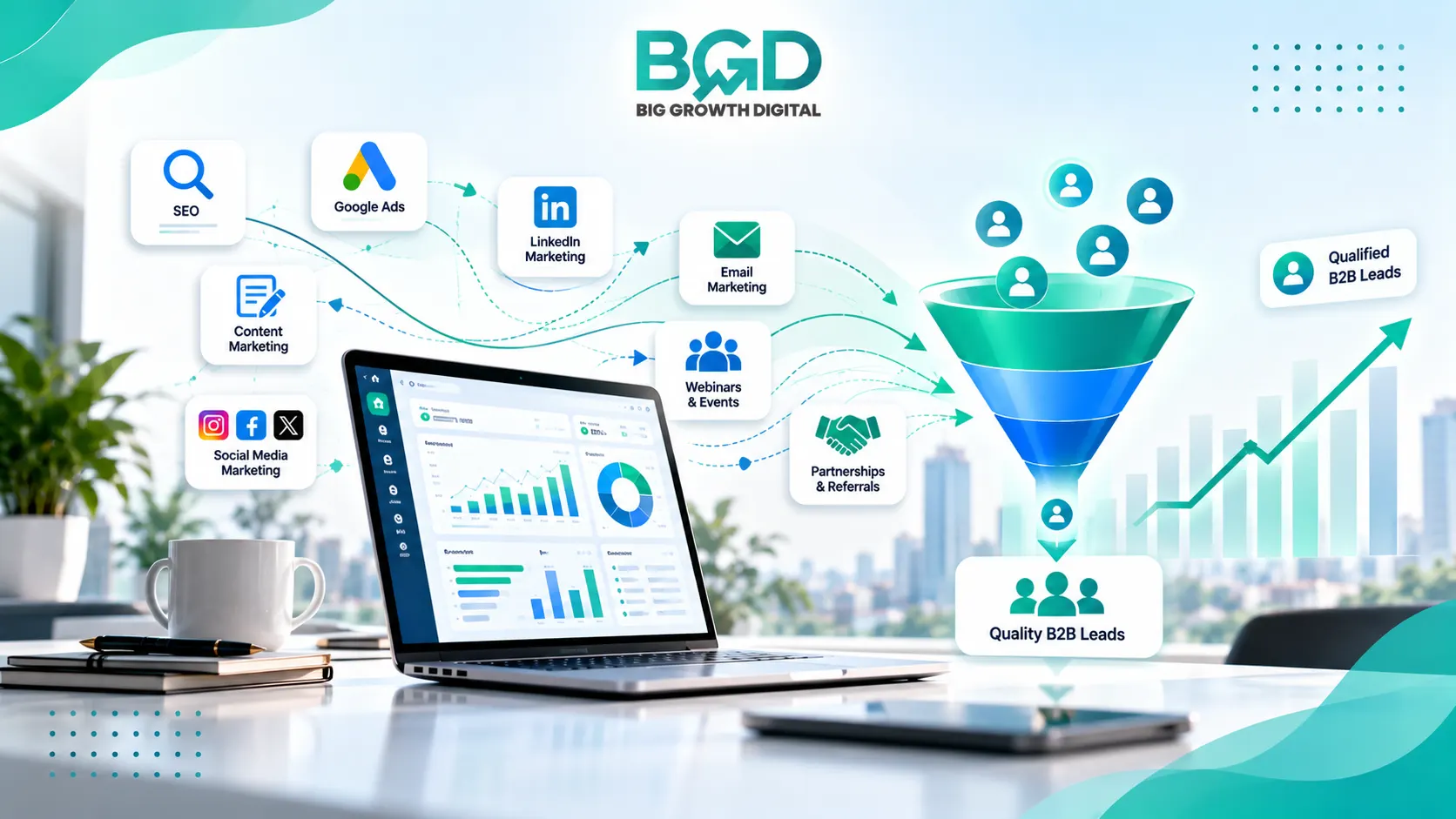
It is important for businesses to generate quality leads, build a strong pipeline, and achieve sustainable growth, but this cannot be possible solely by running ads. It is equally important for the business to attract the prospects, build trust and to convert leads.
Effective B2B lead generation combines target audience, valuable content, and consistent follow-ups. Businesses can benefit from combining multiple channels instead of just relying on a single source. This blog will discuss 10 digital marketing channels worth considering for B2B lead generation.
1. Content Marketing and SEO
Content marketing and search engine optimization help businesses attract prospects who actively search for solutions. Blogs, case studies, whitepapers, and industry guides provide major support in providing solutions to customers' questions while building credibility.
For example, a CRM company can publish articles about improving sales productivity to target and attract businesses that explore automation. Consistent publishing, relevant keywords, and clear calls to action make content and SEO valuable for long-term B2B lead generation.
2. LinkedIn Marketing
LinkedIn helps businesses to reach the professionals, company owners, and decision-makers. Companies can share industry insights, publish case studies, and run targeted advertisements based on job roles, industries, and company sizes.
If paid campaigns are combined with organic content, then LinkedIn becomes one of the most useful B2B marketing channels for building relationships and generating relevant enquiries.
3. Email Marketing
Email marketing supports businesses in nurturing prospects throughout the purchasing cycles. Also, personalised emails, newsletters, and automated follow-ups keep potential customers engaged and segmenting audiences and sharing relevant information improves engagement. B2B digital marketing, including email campaigns, can encourage prospects to book consultations, request demonstrations, or explore services.
4. Google Ads and Paid Search
Google Ads connects businesses with prospects who actively search for specific products or services. Targeting high-intent keywords can generate enquiries more quickly, and it is not dependent on organic visibility alone.
Businesses should optimize keywords, landing pages, and calls to action while tracking conversion rates and cost per lead. This helps in improving B2B lead generation without spending extra on irrelevant clicks.
5. Account-Based Marketing (ABM)
Account-based marketing focuses on selected high-value companies rather than a broad audience. Businesses identify target accounts and create personalised campaigns using email, LinkedIn, and industry-specific content.
This approach is particularly useful for enterprise services and high-value contracts. ABM is among the more focused lead generation strategies for B2B because it aligns sales and marketing around suitable prospects.
6. Website Optimisation and Visitor Identification
If a website is well optimised, it becomes easier for prospects to understand services and submit their queries. Conversations can be improved if the landing pages are clear, use simple forms, with proper testimonials and relevant call to actions then that can support in improving conversions. .
Tools such as Leadinfo can also help identify companies while visiting a website, depending on available data and privacy requirements. This allows businesses to better understand existing traffic and to improve B2B lead generation.
7. Webinars and Online Events
Webinars can also help businesses to demonstrate expertise, explain complex products, and engage interested prospects. Educational sessions, expert discussions, and product demonstrations can address customer concerns.
Promoting webinars through LinkedIn, email, and websites helps attract relevant participants and following up with them can turn engagement into qualified leads.
8. Video Marketing
Videos make complex products and services easier to understand. Businesses can create videos for product demonstrations, customer testimonials, tutorials, and expert interviews to build credibility.
Publishing videos on YouTube, LinkedIn, and company websites can strengthen B2B digital marketing by helping prospects to evaluate solutions before contacting the sales team.
9. Retargeting and Remarketing
Many website visitors leave without submitting an enquiry. If they are retargeted, this allows businesses to reconnect with eligible audiences who had previously interacted with their website or advertisements.
Relevant ads can encourage prospects to revisit service pages, register for webinars, or request consultations and this supports B2B lead generation by re-engaging interested visitors instead of just shifting focus to new audience in acquiring new traffic.
10. Referral Marketing and Online Communities
Referrals and professional communities help businesses to build trust through already existing relationships. Companies can encourage satisfied customers to provide introductions, participate in industry discussions, and collaborate with complementary service providers. Including referrals in lead generation strategies for B2B can complement paid and organic campaigns.
How to Choose the Right Marketing Channels
The right channel mix depends on your target audience, budget, and sales cycle.
Business Objective | Recommended Channels |
To Build Organic Visibility | SEO and content marketing |
To Reach Decision Makers | LinkedIn and ABM |
To Capture Active Demand | Google Ads |
To Nurture Prospects | Email marketing |
To Demonstrate Expertise | Webinars and videos |
To Re-engage Visitors | Retargeting |
To Build Trust | Referrals and communities |
Start with two or three suitable channels and measure qualified leads, conversion rates, customer acquisition cost, and sales pipeline contribution. These metrics help businesses identify which B2B marketing channels deliver meaningful results.
Effective lead generation strategies for B2B focus on lead quality rather than volume alone. Also, reviewing campaign performance regularly helps businesses allocate budgets more efficiently.
Conclusion
The best digital marketing channels for B2B lead generation combine visibility, engagement, and conversion. SEO builds organic reach, LinkedIn connects businesses with decision-makers, and Google Ads captures active demand. Email, ABM, webinars, video, retargeting, website optimisation, and referrals provide additional ways to engage prospects.
Platforms like Big Estate can further support this process by automating lead management and nurturing prospects with timely follow-ups to convert leads effectively. With tools like Big Estate, businesses can also streamline lead management and make it easier for marketing and sales teams to turn digital enquiries into actionable opportunities.
Businesses should select channels that match their audience and measure results consistently. By strengthening B2B digital marketing, choosing suitable B2B marketing channels, and refining lead generation strategies for B2B, companies can build a stronger sales pipeline and support sustainable growth.c
FAQs
1. What are the best channels for B2B lead generation?
SEO, content marketing, LinkedIn, email marketing, Google Ads, and account-based marketing are useful options.
2. Is LinkedIn effective for B2B marketing?
Yes. LinkedIn helps businesses reach professionals and decision-makers through targeted advertising, organic content, and networking.
3. How does SEO generate B2B leads?
SEO improves visibility in search results, helping potential customers discover relevant products, services, and educational content.
4. Is email marketing still effective?
Yes. Personalised emails and timely follow-ups help businesses nurture prospects and maintain communication throughout longer sales cycles.
5. How can businesses improve lead quality?
Refining audience targeting, optimising landing pages, personalising communication, and tracking qualified conversions can improve lead quality.