




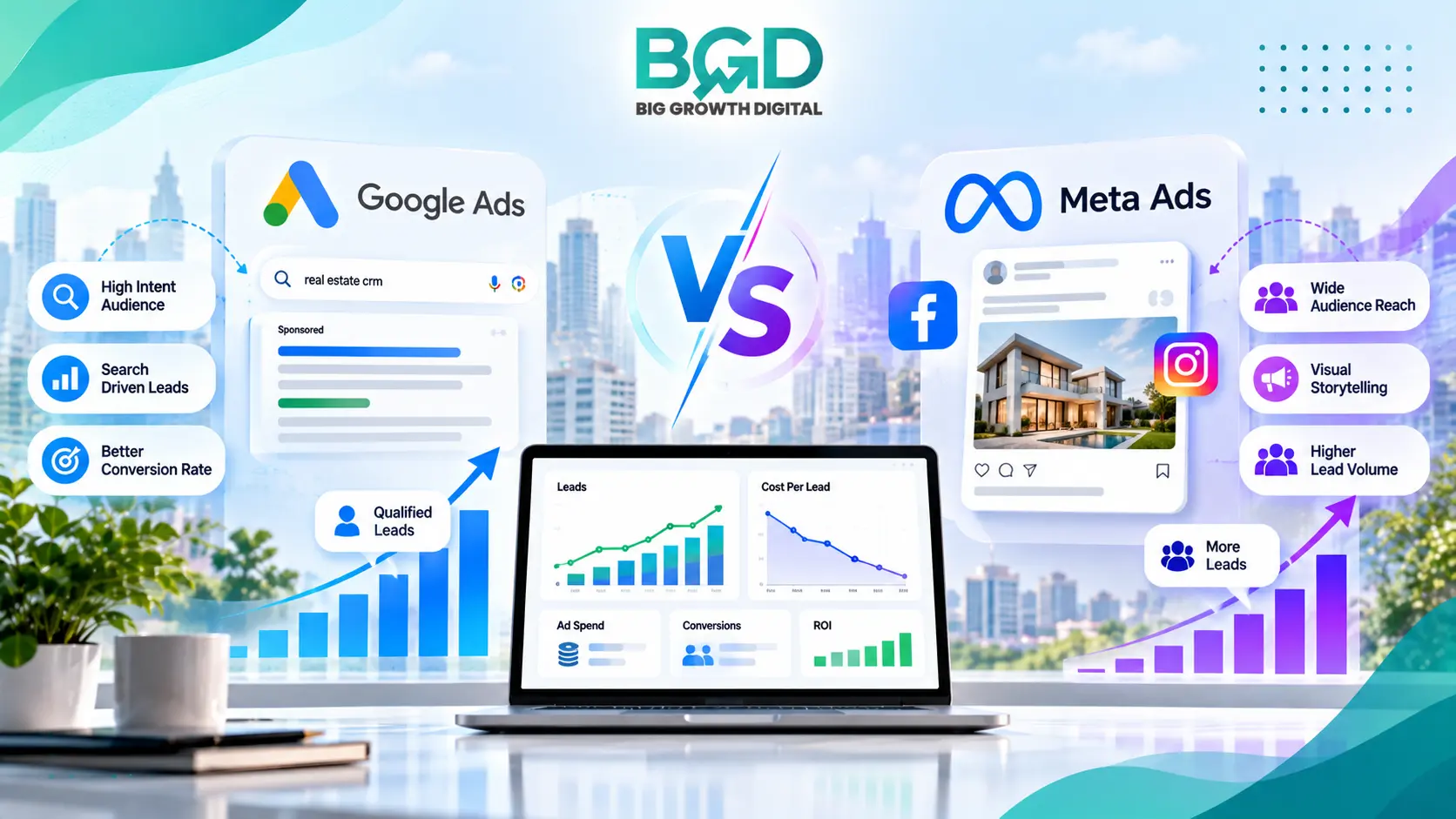
Rohan runs a small interior design studio. Last quarter, he put the same budget into two campaigns, one on Google and one on Meta.
Google sent him a few calls from people who already knew what they wanted. Meta sent a pile of form fills, but half of those people never picked up the phone. Same money, very different results.
So which one is better? That's the real question behind Google Ads vs Meta Ads, and the honest answer depends on what you sell and who you sell it to. Let's sort it out in plain words.
How Google Ads Gets Leads
Google works on search intent. Someone types "interior designer near me" because they need one now. Your ad appears at that exact moment.
Both Google and Meta are strong paid advertising platforms, but Google catches people who are already looking.
Cost: You pay per click. Competitive topics like law, insurance, and finance get expensive fast.
Best for: Businesses people actively search for, such as clinics, consultants, repair services, and software.
Meta Lead Generation Ads Explained
Meta (Facebook and Instagram) works the other way round. Nobody is searching. You interrupt someone's scroll and make them curious, based on their interests, age, and location.
Meta's built-in lead forms make it easy to sign up in two taps. That's why volume is high.
The catch is creative. A boring image or a flat video gets ignored. Your photos, videos, and message do most of the selling here.
Cost Per Lead: Real Numbers
WordStream and LocaliQ both publish yearly benchmark reports on average cost per lead by industry. They're worth a look, but check their latest editions, because figures shift every year.
Most reports show Meta leads costing less than Google leads. That's where people go wrong. A cheaper lead isn't a better deal if it never turns into a customer.
CPL tells you what you paid for a name and number. It doesn't tell you whether that person wants to buy. Many lead generation ads look brilliant on a CPL report and still leave the sales team with nothing.
Lead Quality vs Lead Volume
Google leads
Fewer, but warmer. These people searched for a solution, so they usually answer calls and ask real questions.
Meta leads
More, but cooler. Many signed up out of curiosity or because the form was easy. You need to follow up fast and filter well.
Speed to close
Google leads often decide quicker. Meta leads usually need a few touches before they trust you.
Effort needed
Google needs sharp keywords. Meta needs strong creative and quick follow-up.
Which One Should You Pick?
The Google Ads vs Meta Ads decision gets easier with a few simple questions.
Pick Google if:
People already search for what you sell
You want ready-to-buy enquiries
Your sales team is small
Your service is urgent, like repairs or treatment
Pick Meta if:
Your product is visual or new
People don't know they need you yet
You want to build awareness cheaply
You can follow up on many leads quickly
Which Industries Favour Which
B2B: Google for buyers searching for a solution. Meta works for retargeting and brand awareness.
Local Services: Google wins. Someone with a leaking tap searches, not scrolls.
Healthcare: Google for urgent needs. Meta suits wellness, cosmetic, and preventive care.
Real Estate: Meta is great for showing homes to browsers. Google catches buyers searching a specific area.
Using Paid Advertising Platforms Together
You don't have to choose forever. Think of it as a simple funnel.
Top (Meta): Get your name in front of people who don't know you.
Bottom (Google): Catch them when they search for what you offer.
A sensible starting split is 60% Google and 40% Meta for service businesses. Flip it for visual products. Run it for a couple of months, then move money toward whichever brings more customers.
Common Mistakes to Avoid
Slow follow-up: A lead that waits a day is often gone.
Broad keywords: "Furniture" brings window shoppers. "Custom wardrobe designer Karnal" brings buyers.
Weak creative: On Meta, a dull ad is an invisible ad.
Tracking clicks, not sales: Clicks feel good but don't pay the bills.
Final Thoughts and Next Step
Neither platform wins outright. Google is better at catching people ready to buy, and Meta is better at creating interest. The smartest move is to test both and measure real customers.
That's where Big Estate comes in. Most businesses lose leads after the ad click, through slow replies and messy tracking. We run your Google Ads vs Meta Ads campaigns and handle lead follow-up and tracking from click to sale. You see which ads bring paying customers, not just names on a sheet.
If you want lead generation ads that turn into real business, visit Big Growth Digital and let's talk.
FAQs
1. How do I choose between Google Ads vs Meta Ads for my small business?
If customers actively search for your urgent services, choose Google. If your product is highly visual or you want to build cheap brand awareness, Meta is the better choice.
2. Why are leads from Facebook and Instagram usually cheaper?
Meta interrupts casual scrollers with easy-to-click forms, generating higher volume quickly. However, these leads are often just curious, meaning you have to work much harder to actually close them.
3. Which advertising platform works best for local service businesses?
Search engines win here. When someone has a leaking roof or a broken car, they actively search for a quick fix rather than browsing their social media feeds.
4. Should I only focus on the cost per lead (CPL)?
No, tracking only the cost per lead is dangerous. A cheap lead is completely useless if they never buy. Always measure how many leads actually turn into paying customers.
5. Can I run both paid advertising campaigns at the same time?
Absolutely. The smartest strategy is using social media to build basic brand awareness, while relying on search ads to catch eager buyers exactly when they are ready to purchase.