




Bengaluru's property market is competitive. New residential developments, luxury apartments, plotted projects, commercial spaces, and redevelopment opportunities compete for the attention of buyers who have more information available than ever before.
A potential buyer might discover a project through Instagram, search for the developer on Google, compare locations on Maps, watch a walkthrough on YouTube, and enquire only after reviewing several competing properties.
For real estate developers, this creates a challenge: getting a project noticed is no longer enough. Marketing needs to attract the right audience, communicate the project's value, build trust, and generate enquiries that can progress into site visits and sales.
This is where a specialised real estate marketing agency in Bangalore can help developers build a structured digital marketing strategy.
Developers searching for a real estate agency in Bangalore should also distinguish between property brokerage services and agencies that specialise in project marketing, digital advertising, lead generation, SEO, and brand promotion. The right marketing partner should understand how to promote a real estate project and connect marketing activity with business objectives.
From location-focused SEO and Google Ads to Meta campaigns, creative production, landing pages, and lead management, real estate marketing requires a coordinated approach rather than disconnected advertisements.
In this guide, we explore how real estate marketing works in Bangalore, which strategies developers can use, how to generate qualified leads, and how to measure campaign performance.
Why Real Estate Marketing in Bangalore Requires a Local Strategy
Bengaluru is not a single residential or commercial market. Buyer preferences, property budgets, employment locations, connectivity, project positioning, and competition differ across neighbourhoods.
A project targeting technology professionals near Whitefield may require a different marketing strategy from a luxury residential development near Sarjapur Road or a commercial property targeting businesses in central Bengaluru.
The same campaign cannot effectively communicate every project's value.
Real estate developers need marketing strategies built around the project's location, buyer profile, price range, property category, competitive landscape, and sales objectives.
Understanding Bangalore's property micro-markets
Location is one of the most important factors influencing property searches and marketing decisions.
Location | Marketing considerations |
Whitefield | Technology employment hubs, residential demand, connectivity and competing projects |
Sarjapur Road | Multiple residential clusters, employment access, infrastructure and project differentiation |
Electronic City | Technology-sector audiences, connectivity and residential positioning |
North Bangalore | Airport-oriented searches, employment growth narratives and project-specific location advantages |
Hebbal | Connectivity, established residential demand and premium project positioning |
Yelahanka | Residential communities, northern Bengaluru and different buyer requirements |
Kanakapura Road | Residential developments, location advantages and southern Bengaluru demand |
These are marketing considerations, not investment recommendations. Each project's exact location, verified connectivity, target buyer and competitive position should inform its campaign strategy.
For example, a developer marketing apartments near Whitefield may target professionals researching homes close to employment hubs. A project in North Bengaluru may need to communicate its exact location, existing connectivity, and relevant verified infrastructure information rather than relying entirely on future development narratives.
The more accurately a campaign reflects the project and its audience, the more relevant its messaging becomes.
7 Real Estate Marketing Strategies That Work in Bangalore
Real estate developers need a combination of channels to build awareness, capture demand, and convert prospects.
The right mix depends on the project's stage, budget, target audience, and marketing objectives.
1. Search Engine Optimisation (SEO)
SEO helps real estate projects attract potential buyers who are actively researching properties, locations, developers, and residential options.
A developer can build organic visibility through project pages, location-focused pages, informative blogs, FAQs, and relevant supporting content.
Keyword research should reflect different search behaviours.
Examples include:
Apartments in Whitefield
Luxury apartments in Sarjapur Road
Flats near Electronic City
New residential projects in North Bangalore
3 BHK apartments in Bangalore
Residential projects near a specific locality
Property investment in Bangalore
These keywords should only be targeted when the project or content genuinely matches the search intent.
An effective SEO strategy includes technical optimisation, mobile usability, page speed, relevant content, internal linking, search intent alignment, and ongoing performance analysis.
For developers with multiple projects or locations, structured location and project content can help create a stronger organic search presence.
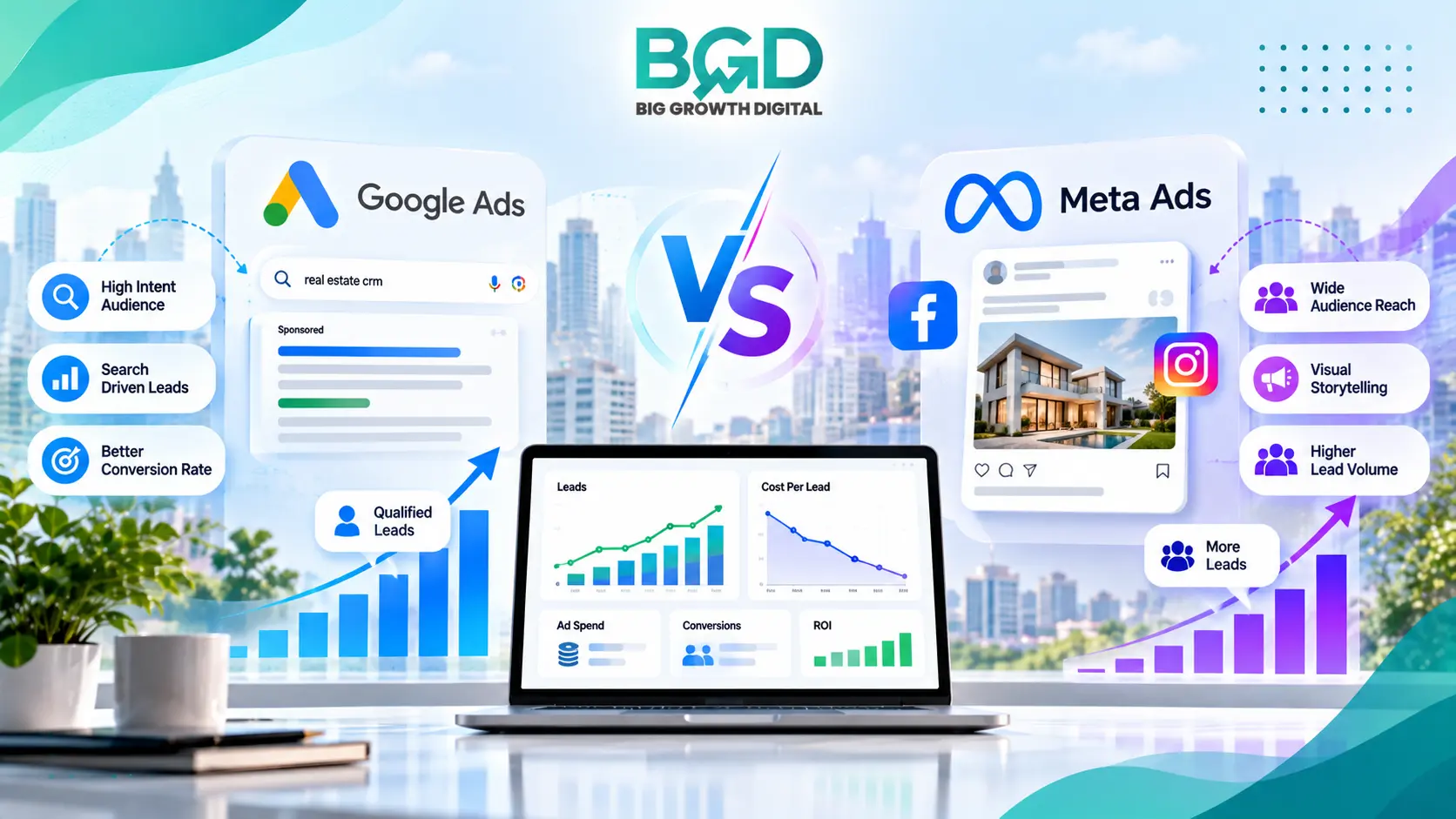
2. Google Ads for High-Intent Property Searches
Google Ads helps developers reach people actively searching for property-related information.
Search campaigns can target relevant keywords associated with the project, property type, location, price segment, and buying requirements.
For example, someone searching for "luxury apartments near Whitefield" may have a different intent from someone searching for "Bangalore real estate market trends."
Campaigns should be designed around those differences.
Important Google Ads practices include:
Separating campaigns by project or relevant audience
Using appropriate keyword match types
Adding negative keywords to reduce irrelevant traffic
Creating advertisements that accurately reflect the project
Sending traffic to relevant landing pages
Tracking calls, forms, WhatsApp enquiries and other conversions
Optimising campaigns using lead quality and sales feedback
A well-managed campaign should focus on attracting relevant prospects, not simply maximising traffic.
3. Meta Ads for Real Estate Lead Generation
Facebook and Instagram advertising can help developers build awareness, promote launches, generate enquiries, and remarket to audiences who have previously interacted with their campaigns.
Real estate creative formats may include:
Project walkthrough videos
Lifestyle and amenity creatives
Location-focused videos
Construction progress updates
Floor plan creatives
Project launch campaigns
Testimonials
Short-form videos and reels
Lead generation forms
Creative messaging should clearly communicate why a project is relevant to the audience.
For example, a campaign targeting families may emphasise verified amenities, living spaces, location convenience, and community features. A campaign targeting investors may focus on factual project details, location context, and relevant market information without promising returns.
Creative testing is essential. Different headlines, visuals, messaging angles, formats and calls to action can be tested to understand which combinations generate relevant enquiries.
4. Location-Based Marketing
Location is a major part of property buying decisions, making local marketing especially important for real estate developers.
A project should communicate its location accurately and clearly.
Location-based marketing may include:
Local SEO
Google Business Profile optimisation, where appropriate
Locality-focused content
Search campaigns targeting relevant locations
Location-specific landing pages
Maps and accessibility information
Neighbourhood guides
Verified connectivity and nearby facilities
A project page should not merely state that it is located in Bangalore. It should help potential buyers understand the exact locality, nearby facilities, accessibility, and relevant location advantages.
Avoid generic statements such as "the best location in Bangalore" unless there is a clear and verifiable basis for the claim.
5. Real Estate Content Marketing
Content marketing helps developers answer the questions potential buyers ask before contacting a sales team.
A content strategy can cover different stages of the buyer journey.
Awareness-stage content
Bangalore property market overview
Locality comparisons
Home-buying guides
Residential property trends
Infrastructure and connectivity explainers
Consideration-stage content
Project comparisons
Property type guides
Location advantages
Amenities and lifestyle information
Developer background and previous projects
Decision-stage content
Project FAQs
Floor plans
Price and cost information, where approved
Construction updates
Site visit information
Booking process guides
The goal is to provide useful information rather than publish repetitive keyword-focused articles.
Content should demonstrate first-hand project knowledge, accurate information, relevant expertise, and transparent communication.
6. Video Marketing and Creative Production
Property is a visual product, and video can help buyers understand a project before arranging a site visit.
Real estate video content may include:
Property walkthroughs
Drone footage, where legally permitted
Amenity showcases
Project explainers
Construction updates
Location videos
Short-form social videos
Customer testimonials
Developer interviews
A video should have a clear objective. A project walkthrough may help communicate layouts and amenities, while a short location video may support awareness and engagement.
Videos can also be repurposed across social platforms, campaign landing pages, YouTube, and remarketing campaigns.
7. Lead Nurturing and CRM Integration
Generating an enquiry is only the beginning of the sales journey.
Real estate prospects may enquire about a project and then require additional information, follow-up calls, financing discussions, site visits, and time before making a decision.
A structured lead management system can help developers organise and track this process.
A useful workflow may include:
Capture leads from advertising, websites, calls, and other sources.
Assign enquiries to the appropriate sales team.
Record the first contact and follow-up activity.
Identify the prospect's requirements and level of interest.
Schedule site visits where appropriate.
Track the prospect through the sales pipeline.
Share sales feedback with the marketing team.
CRM integration can also help identify which campaigns generate qualified prospects and which require improvement.
Marketing and sales teams should work together. Campaign performance becomes more meaningful when advertising data is connected with lead outcomes.
How to Build a Real Estate Digital Marketing Funnel
A real estate marketing funnel helps developers organise marketing activity according to the buyer's journey.
Funnel stage | Buyer behaviour | Marketing activity |
Awareness | Discovers a project or developer | Social media, video, display, content |
Interest | Explores project details | Project pages, walkthroughs, location content |
Consideration | Compares options | Search campaigns, FAQs, comparisons, remarketing |
Enquiry | Requests information | Landing pages, forms, calls, WhatsApp |
Qualification | Sales team evaluates requirements | CRM, calling, lead qualification |
Site visit | Visits the project | Follow-up, scheduling, visit coordination |
Conversion | Progresses towards booking | Sales communication and relevant information |
Not every buyer follows this journey in the same order. Some may discover a project through search, while others may see a social media advertisement and enquire immediately.
The funnel provides a framework for understanding where prospects are engaging and where opportunities may be getting lost.
How to Generate Qualified Real Estate Leads in Bangalore
Lead generation should be evaluated using more than the total number of enquiries.
A qualified lead is generally a prospect who meets the developer's relevant requirements, such as location preference, budget, property type, buying timeline, and level of interest.
The exact qualification criteria vary between projects.
Improve campaign targeting
Campaign targeting should align with the project's audience and buying requirements.
Depending on the campaign, this may involve relevant search keywords, locations, audience signals, creative messaging, and remarketing strategies.
Avoid targeting audiences simply because they are large. Relevance is more important than reach alone when the objective is lead generation.
Create dedicated landing pages
A landing page should be designed around the campaign's objective.
It should communicate:
Project name and location
Key verified project details
Relevant amenities and features
Approved images and videos
Clear enquiry options
Contact information
Appropriate disclosures
Mobile-friendly design
A campaign advertising a specific project should ideally direct visitors to a page that provides information about that project rather than a generic homepage.
Make enquiry forms simple
Long forms can create friction, while forms that collect no useful information may make lead qualification difficult.
Collect only information necessary for the enquiry and qualification process.
Depending on the project, this may include the prospect's name, contact details, property preference, budget range, or buying timeline.
Improve follow-up processes
Response time, communication quality, and consistency can influence how enquiries progress.
Marketing teams should work with sales teams to establish lead assignment, follow-up responsibilities, CRM tracking, and feedback mechanisms.
Campaigns should be reviewed using actual lead outcomes rather than assumptions about lead quality.
How to Measure Real Estate Marketing Campaign Performance
A campaign can generate substantial traffic and still perform poorly if the traffic does not convert into relevant enquiries.
Developers should track metrics across the marketing funnel.
Metric | What it measures |
Impressions | How often advertisements are displayed |
Reach | Number of unique users exposed to campaigns |
CTR | Percentage of impressions resulting in clicks |
CPC | Cost per advertising click |
Conversion rate | Percentage of visitors completing a desired action |
CPL | Average cost of generating an enquiry |
Qualified lead rate | Share of enquiries meeting qualification criteria |
Cost per qualified lead | Cost of generating a qualified prospect |
Site visit rate | Share of leads progressing to a site visit |
Cost per site visit | Cost associated with generating a site visit |
Booking rate | Share of leads or prospects converting into bookings |
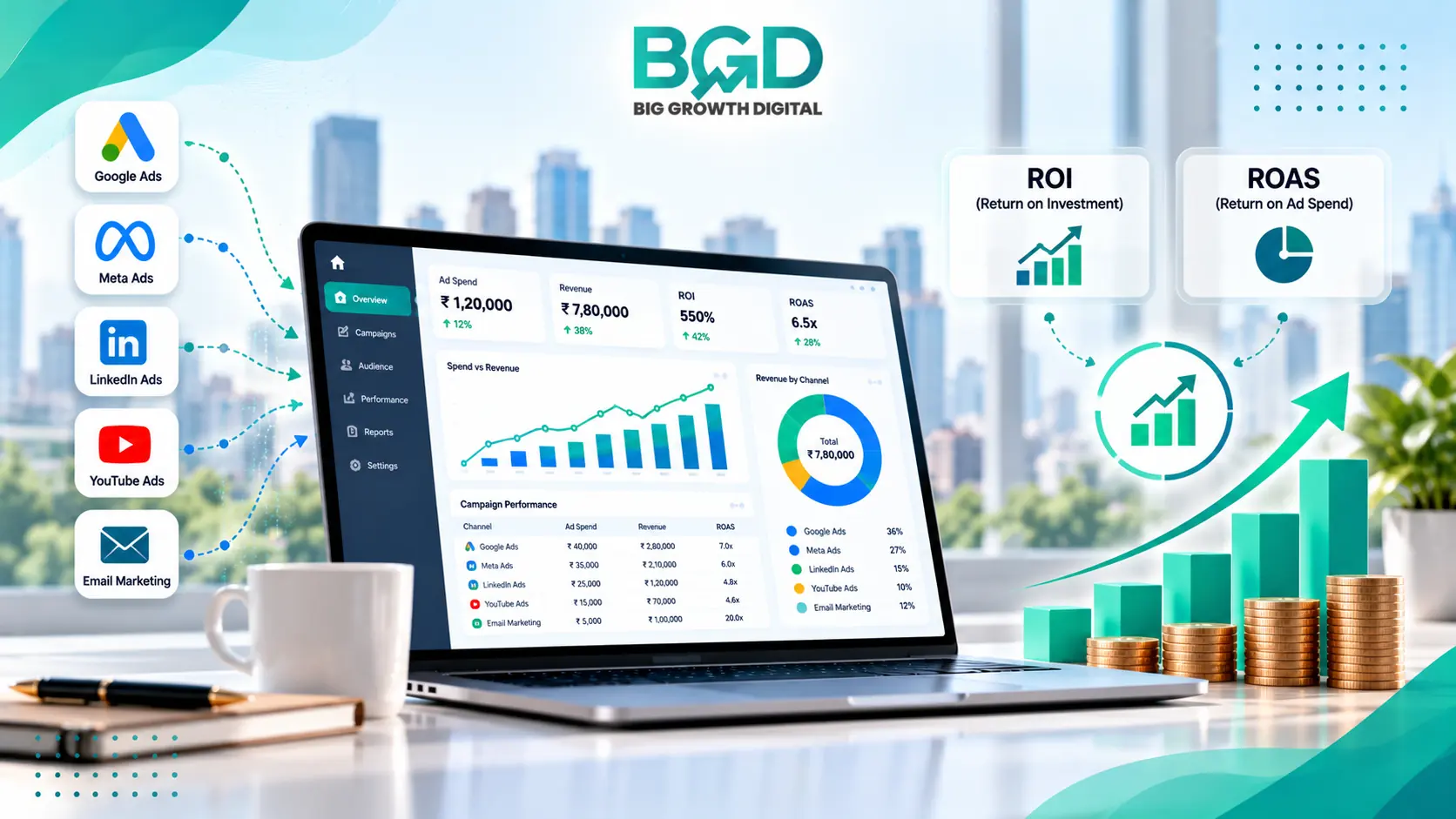
ROAS | Attributed revenue relative to advertising spend, where reliable attribution is available |
These metrics should be interpreted in context.
For example, a lower CPL may not indicate better performance if the campaign generates enquiries that are unreachable or irrelevant.
Similarly, campaigns targeting premium properties may have a different cost structure from campaigns targeting more affordable residential projects.
The best measurement framework connects advertising performance with sales outcomes wherever reliable tracking is available.
Common Real Estate Digital Marketing Mistakes Developers Should Avoid
Many campaigns underperform because of execution gaps rather than a lack of advertising budget.
1. Running advertisements without a clear strategy
Campaigns should begin with defined objectives, target audiences, positioning, budget allocation, creative requirements, and measurement plans.
2. Sending all traffic to the same page
Different campaigns and audiences may require different landing pages. The page should match the advertisement and the user's intent.
3. Optimising only for cheap leads
A low cost per lead can be misleading when lead quality is poor. Use sales feedback and qualification data to evaluate campaign performance.
4. Ignoring creative fatigue
Repeatedly showing the same advertisements can reduce engagement. Refresh creatives, test different messaging, and monitor campaign performance.
5. Not connecting marketing with sales
Marketing teams need feedback from sales teams to understand which enquiries are relevant, which campaigns perform well, and where prospects drop off.
6. Publishing generic SEO content
Content should provide useful, relevant information for the intended audience. Repetitive articles created only to target keywords may fail to establish meaningful expertise or attract qualified traffic.
7. Failing to track conversions properly
Without conversion tracking, developers may struggle to identify which campaigns, keywords, advertisements, and landing pages generate enquiries.
Why Developers Work With a Real Estate Marketing Agency in Bangalore
A specialised agency can help developers bring multiple marketing activities together under a structured strategy.
Instead of managing SEO, advertising, creatives, landing pages, analytics, and lead management through disconnected workflows, a marketing partner can coordinate the execution and performance review.
When evaluating a real estate marketing company in Bangalore, developers should look for:
Relevant real estate marketing experience
Understanding of the Bangalore market
Strategic campaign planning
Strong creative execution
SEO and paid advertising capabilities
Lead generation and qualification knowledge
Transparent reporting
Clear communication
Performance optimisation
The right agency should understand the project's marketing objectives and explain how its strategy supports those objectives.
How Big Growth Digital Helps Real Estate Developers
Big Growth Digital is a real estate-focused digital marketing and PropTech company based in Gurugram, helping developers build visibility, generate enquiries, and improve digital marketing performance.
Our services include performance marketing, SEO, creative production, social media management, website development, campaign analytics, and marketing technology.
For real estate projects, marketing strategy needs to reflect the project's positioning, target audience, location, competition, and sales objectives.
Our approach combines creative communication, digital campaigns, landing pages, analytics, and lead generation to support different stages of the buyer journey.
Through our real estate marketing technology platform, Big Estate, developers can gain better visibility into campaign activity, performance, and lead journeys.
We believe real estate marketing should be measurable, transparent, and connected with business objectives.
If you are marketing a residential project, commercial development, plotted project, or real estate brand in Bangalore, the strategy should begin with understanding your project and its target audience.
Planning a real estate project launch or looking to improve your lead generation campaigns?
Connect with Big Growth Digital to discuss your marketing objectives and explore a strategy for your project.
Conclusion
Bangalore's property market requires more than generic advertising. Developers need marketing strategies that communicate project value, reach relevant audiences, build trust, and support the journey from discovery to enquiry and site visit.
SEO, paid advertising, location-focused content, video marketing, landing pages, lead management, and performance analytics can work together to create a more structured marketing approach.
The key is understanding what the project needs, identifying the right audience, and measuring performance using meaningful outcomes.
For real estate developers, the objective should not simply be more leads. It should be better visibility, more relevant enquiries, and a marketing system that supports the sales process.
Big Growth Digital helps real estate brands approach digital marketing with strategy, creative execution, performance measurement, and technology.
If you're preparing to launch or promote a real estate project in Bangalore, start by defining your audience, positioning, and marketing objectives—and build your strategy around them.
Disclaimer: Marketing outcomes vary based on project positioning, market conditions, advertising budget, campaign execution, competition, and sales follow-up. This article is intended for general informational and marketing purposes.
Frequently Asked Questions
1. What is real estate marketing?
Real estate marketing involves promoting residential, commercial, and other property projects to relevant buyers, investors, and prospects through digital and offline channels. It includes branding, advertising, SEO, content, creative production, lead generation, and sales-support activities.
2. Which is the best real estate marketing agency in Bangalore?
The best agency depends on your project, objectives, budget, audience, and required services. Developers should evaluate real estate experience, campaign capabilities, case studies, reporting, creative quality, lead generation strategy, and communication before selecting an agency.
3. How can real estate developers generate leads in Bangalore?
Developers can generate leads through Google Ads, Meta Ads, SEO, social media, video marketing, location-focused content, project landing pages, remarketing, and CRM-based lead nurturing. The right channel mix depends on the project and target audience.
4. How do I find a real estate agency in Bangalore for marketing my project?
Developers searching for a real estate agency in Bangalore should clarify whether they need a property broker or a digital marketing partner. For project marketing, evaluate agencies based on real estate experience, advertising capabilities, SEO, creative production, lead generation, reporting, and campaign performance.
5. How much does real estate digital marketing cost in Bangalore?
Costs depend on the services required, advertising budget, project scale, campaign complexity, creative production, website requirements, and agency fees. Developers should request a detailed proposal that separates management fees from advertising spend and other costs.
6. How can developers improve real estate lead quality?
Lead quality can improve through better audience targeting, relevant advertisements, accurate project messaging, dedicated landing pages, qualification questions, CRM integration, sales feedback, and campaign optimisation based on qualified lead outcomes.