




Most developers and brokers blame the same two things when sales slow down: the ad platform ("Google leads are junk this month") or the callers ("nobody's serious this quarter"). In most cases, neither is the real problem. The leak is almost always upstream of a lead generation system that was never built, so leads arrive, sit in a spreadsheet, get called twice, go cold, and buy from whoever follows up better.
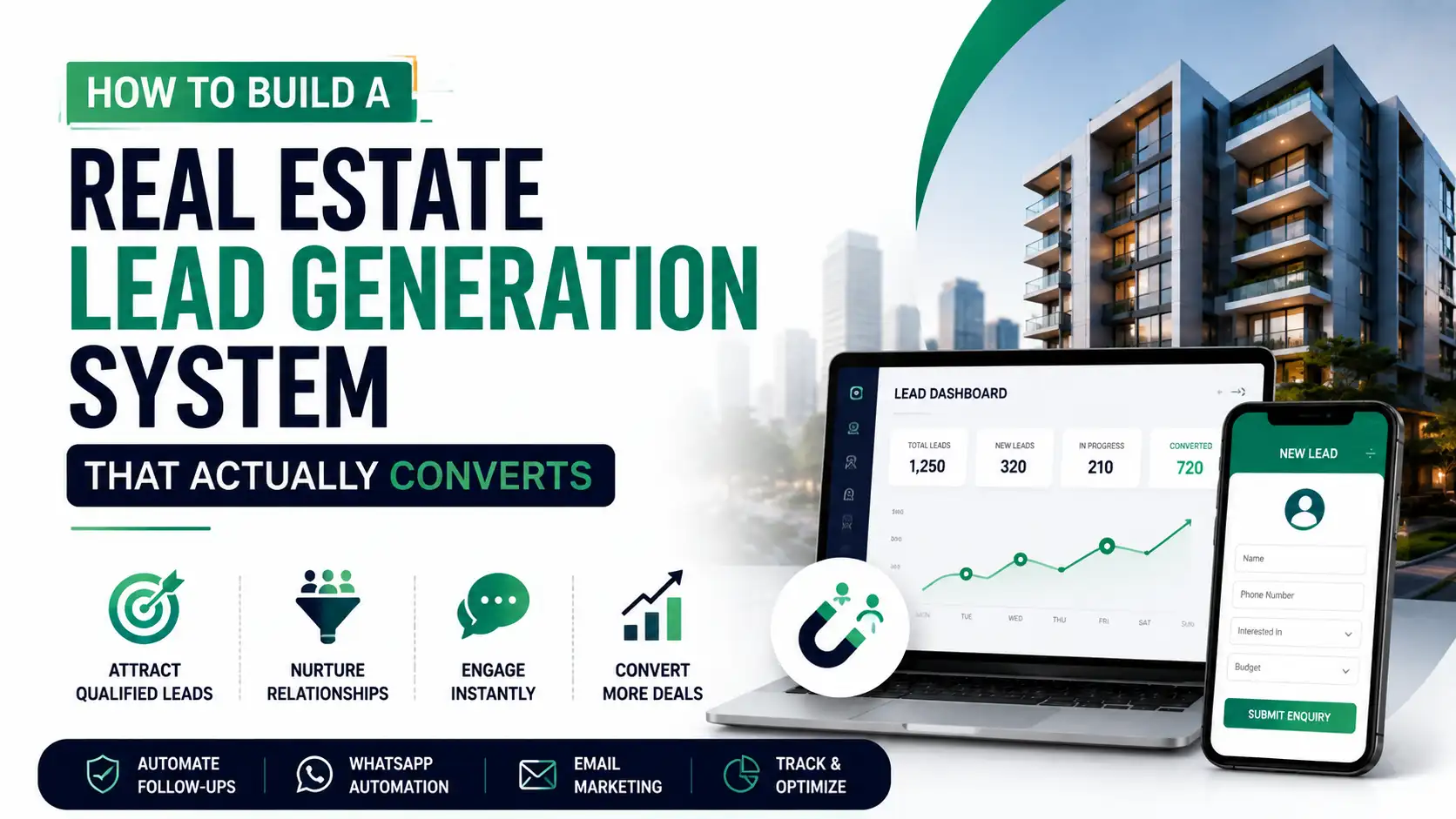
This guide covers how to build a real estate lead generation system properly from capture through CRM, nurturing, and measurement and the benchmarks that tell you whether your pipeline is actually healthy or just busy.
Why More Leads Rarely Fixes a Sales Problem
Running Google and Meta campaigns without a lead management system in place is functionally the same as pouring water into a bucket with a hole in it. Leads arrive, get logged inconsistently across WhatsApp, spreadsheets, and call logs, and quietly disappear between touchpoints. The buyer doesn't stop being interested; they just end up transacting with whoever responded faster or followed up more consistently.
This is why lead volume and sales volume so often move independently of each other. A campaign can double lead flow and sales can stay flat, because the constraint was never lead supply; it was the system turning inquiries into site visits and site visits into bookings.
The Three Types of Real Estate Leads
Not all leads should be treated the same way, and most lead-generation frustration comes from applying one follow-up approach to all three.
Paid buyer leads. Portal and ad-platform inquiries for someone who clicked a listing or filled a form. Abundant, often early-stage, and frequently shared across multiple agents or developers targeting the same buyer pool. These need speed above everything else; a buyer comparing five projects on a Tuesday night goes with whoever replies first with something useful.
Seller and valuation leads. A homeowner requesting a valuation or exploring resale options is signaling something more specific they're thinking about their own property, not browsing generically. These convert at a higher value but take longer, often 6–18 months from first enquiry to listing. They need nurture, not speed.
Database and predictive leads. The quietest and often most profitable category: contacts already sitting in your CRM past clients, site-visit attendees who didn't book, old enquiries that went cold. Scoring this database by engagement and recency routinely outperforms buying new leads, because these contacts already know who you are.
The Four Building Blocks of a Real Estate Lead Management System
1. Capture one place for every inquiry
Every channel WhatsApp, portal forms, ad platforms, walk-ins, referrals needs to land in a single centralized system, not five different inboxes. Scattered capture is the single most common reason genuine leads go missing; the inquiry wasn't ignored, it was never consolidated in the first place.
2. CRM structured, not just stored
A real estate CRM earns its place with three components: a clean, deduplicated database; property-matching fields (budget, location, configuration, key dates); and a defined pipeline stage for every contact
New Lead → Contacted → Site Visit → Negotiating → Booked → Closed.
Automation layers on top of this: instant alerts on new leads, geographic auto-routing, and task reminders so follow-ups don't depend on memory.
3. Nurture built for the real sales cycle
Real estate sales cycles routinely run 6–18 months, which means a nurture sequence that stops after six weeks is structurally incomplete. A working system segments contacts by where they are in the journey, maps content to that stage, and runs automated multi-channel touchpoints email, WhatsApp, SMS over the full cycle, not just the first few weeks.
4. Measurement the KPIs that actually diagnose problems
Metric | Healthy Benchmark | What It Tells You |
Leads contacted within the first hour | 70%+ | Speed-to-lead discipline |
Leads reaching a site visit | 12–18% | Below 10%? Follow-up or lead quality issue |
Site visits resulting in booking | 15–25% | Below 15%? Pricing, product, or sales-process issue not marketing |
Cost per booking, by source | Tracked per channel | Where to shift budget |
Leads with no activity in 30+ days | As close to zero as possible | Leads currently leaking out of the system |
This table is the fastest way to diagnose where a pipeline is actually breaking. Low site-visit percentage points at follow-up. Low booking percentage from a healthy site-visit rate points at price or product not the marketing team.
Building the System: A 4-Step Framework
Step 1: Build capture infrastructure. Set up a converting form or CTA tied directly to a centralized system, so contact details flow in automatically instead of requiring manual entry.
Step 2: Configure the CRM. Clean the database, tag contacts by intent (buyer, seller, partner/referral source), and define the pipeline stages before adding automation on top.
Step 3: Build the long-cycle nurture sequence. Segment by persona and journey stage, then automate multi-channel touchpoints across the full 6–18 month cycle, with activity-based scoring to flag which leads are warming up.
Step 4: Measure, optimize, and scale. Track the five KPIs above monthly. Fix the weakest one before adding more ad spend pouring more leads into a broken system just produces more leads that leak out unconverted.
DIY, Agency-Managed, or Software Platform Which Fits?
DIY (Spreadsheet + Manual) | Software-Only Platform | Agency-Managed | |
Best for | Very small pipelines, early-stage brokers | Teams comfortable running their own campaigns | Developers running paid campaigns without an in-house marketing team |
Speed to lead | Depends entirely on manual discipline | Fast if automation is configured correctly | Fast campaign and follow-up are managed together |
Cost structure | Time only | Subscription (varies by platform) | Retainer or performance-based |
Main risk | Leads leak through manual gaps | Still requires someone to run and interpret it | Less internal control over process |
For an illustrative example: a Gurgaon-based real estate brand like Big Estate benefits from this structure differently depending on scale a single-project launch might run fine on a well-configured CRM and disciplined manual follow-up, while a multi-project pipeline across several micro-markets typically needs the automation layer to keep site-visit and booking percentages from slipping as volume grows.
Frequently Asked Questions
Q. What is a real estate lead generation system?
A real estate lead generation system is the combination of lead capture infrastructure, a CRM with defined pipeline stages, automated multi-channel nurturing, and measurement built to move a contact from first enquiry through site visit to booking, rather than just collecting inquiries.
Q. How is a lead generation system different from just running ads?
Ads generate contacts; a system determines what happens to those contacts afterward. Running ads without a system typically produces lead volume without a proportional increase in bookings, because the leak happens in follow-up, not lead supply.
Q. What's a healthy site-visit-to-booking ratio in real estate?
Industry benchmarks for well-priced projects with a competent sales team typically run 15–25%. A rate consistently below 15% usually points to pricing, product positioning, or the sales process itself, not the marketing that generated the lead.
Q. How long should a real estate nurture sequence run?
Given that real estate sales cycles often run 6–18 months, a nurture sequence that stops after 4–6 weeks is incomplete. Long-cycle sequences that continue with market updates, project milestones, and periodic check-ins convert leads that would otherwise be marked "not interested" prematurely.
Q. Should a broker buy leads from third-party sources?
Third-party lead sources are frequently sold to multiple brokers simultaneously, which drives down conversion because prospects have often been contacted several times before you reach them. Leads generated through owned channels your own ads, website, and referral network are typically higher quality precisely because they aren't shared.
Q. What KPIs should a real estate business track monthly?
At minimum: percentage of leads contacted within the first hour, percentage reaching a site visit, percentage of site visits converting to bookings, cost per booking by source, and the count of leads with no follow-up activity in 30+ days. These five numbers diagnose almost every common pipeline problem.