




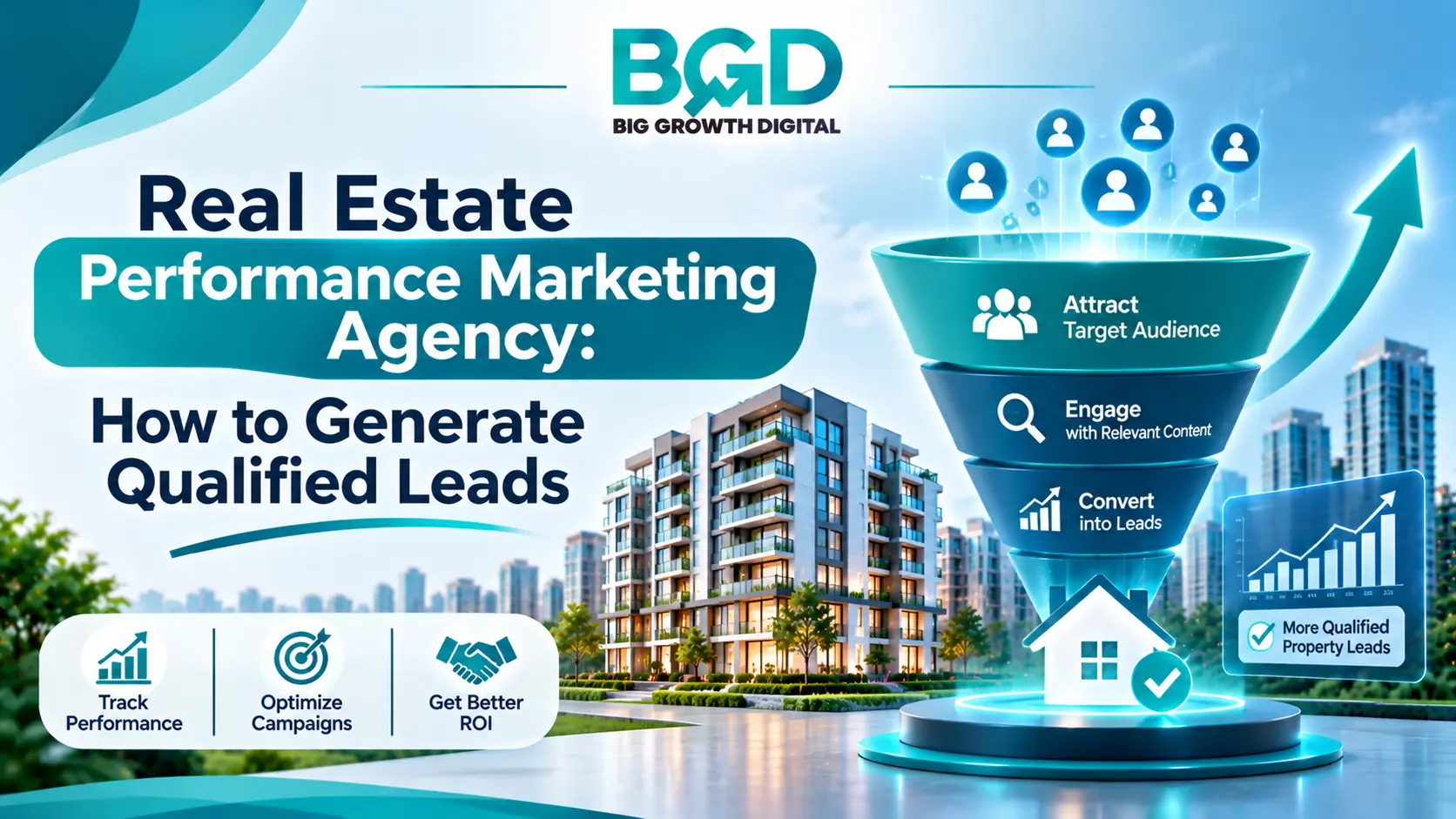
Generating property enquiries is not the same as generating qualified leads. A real estate campaign may attract hundreds of people, but if they have the wrong budget, location preference or purchase intent, the sales team can spend valuable time following up without achieving meaningful results.
This is where a real estate performance marketing agency plays an important role. Instead of focusing only on advertising reach or enquiry volume, it builds campaigns around measurable outcomes such as qualified prospects, connected leads, site visits and acquisition costs.
For developers, builders, brokers and property businesses, the objective is straightforward: make every marketing rupee work harder by reaching the right audience and improving the journey from advertisement to sales conversation.
Let's explore how performance marketing can help real estate businesses generate better-quality leads.
1. Why More Property Enquiries Don't Always Mean Better Campaign Performance
Imagine a residential developer running a digital campaign with a monthly advertising budget of ₹3 lakh.
The campaign generates 600 enquiries, but only 120 prospects are reachable, 45 meet the project's budget requirements and 12 express genuine interest in a site visit.
The initial cost per lead may look attractive, but the campaign's actual business value depends on what happens after the enquiry.
Campaign metric | Result |
Advertising spend | ₹3,00,000 |
Total enquiries | 600 |
Reachable prospects | 120 |
Budget-qualified prospects | 45 |
Site visit interest | 12 |
Cost per enquiry | ₹500 |
Cost per budget-qualified prospect | ₹6,667 |
This example highlights an important distinction: cost per lead and cost per qualified lead are not the same.
A strong performance strategy evaluates the entire acquisition process instead of treating every form submission as a successful outcome.
2. Build the Campaign Around the Property's Actual Buyer
The first step in performance marketing for real estate is identifying the audience most likely to be interested in the offering.
A campaign for luxury apartments should not target exactly the same audience as one for affordable housing, commercial offices or retail investment.
Before launching advertisements, the marketing team should define:
Property category and project positioning
Target locations and relevant catchment areas
Expected buyer budget
End-user and investor segments
Property configuration or space requirements
Purchase timeline and decision-making factors
For example, a premium residential project in Gurgaon may target professionals, business owners and investors looking for specific configurations and location advantages.
A commercial development may require a different strategy focused on business owners, retailers, investors or corporate decision-makers.
The agency should translate these audience characteristics into campaign targeting, creative messaging and landing-page content.
3. Choose Advertising Channels Based on Buyer Intent
Different advertising platforms serve different purposes. The right channel mix depends on whether the business wants to capture existing demand, create awareness or reconnect with interested prospects.
Google Search Ads
Search advertising helps reach people actively looking for property options. Campaigns can target relevant searches around property types, locations, configurations and project categories.
Keyword selection should reflect commercial intent rather than simply chasing high search volumes.
Meta Ads
Facebook and Instagram campaigns can introduce projects to relevant audiences, test creative concepts and generate enquiries. They are also useful for remarketing to people who have previously interacted with the brand or website.
YouTube and Video Advertising
Video can communicate project features, location context, amenities and brand positioning. It can support awareness and consideration before a prospect submits an enquiry.
Remarketing Campaigns
Not every visitor enquires during the first interaction. Remarketing can reconnect with eligible audiences who have visited project pages, watched videos or engaged with previous advertisements.
Effective real estate digital advertising combines these channels according to their roles instead of expecting one platform to solve every acquisition challenge.
4. Create Landing Pages That Qualify Interest
Sending every advertisement visitor to the homepage can create unnecessary friction. A campaign-specific landing page gives prospects a clearer path to understand the property and enquire.
A useful real estate landing page should communicate:
Project category and location
Relevant configurations or property options
Genuine project features and differentiators
Useful images, floor plans or brochures where available
Clear contact and enquiry options
Mobile-friendly forms and page experience
The form itself should collect enough information to support initial qualification without becoming unnecessarily long.
Depending on the project, useful fields may include preferred configuration, approximate budget, purchase timeline and contact details.
The aim is not to make every visitor fill in a lengthy questionnaire. It is to make the enquiry process clear while helping the sales team understand the prospect's requirements.
5. Improve Property Buyer Lead Generation With Better Qualification
Strong property buyer lead generation requires more than selecting advertising audiences. Businesses also need a process for understanding the enquiries they receive.
A practical qualification framework can consider five factors:
Qualification factor | What to understand |
Budget | Does the prospect's budget match the offering? |
Location | Is the project location suitable? |
Requirement | Is the prospect interested in the relevant property type? |
Timeline | Is the purchase or investment being considered soon? |
Intent | Is the enquiry genuine and relevant? |
The sales team should record the outcome of each interaction. This information helps the marketing team identify which campaigns, audiences and messages are producing relevant prospects.
For example, if a campaign generates many enquiries but few prospects meet the budget requirement, the agency may need to adjust audience targeting, advertising language or landing-page qualification.
This feedback loop is central to effective real estate lead generation services.
6. Connect Advertising With Lead Follow-Up
A qualified enquiry can lose value if the sales team receives it late or does not follow up consistently.
Real estate businesses should therefore evaluate what happens immediately after a form submission, phone call or WhatsApp enquiry.
A connected lead-management process should support:
Capturing enquiries from different campaign sources.
Assigning leads to the appropriate sales representative.
Recording call attempts and communication history.
Tracking follow-up status.
Identifying interested prospects and site visit opportunities.
Sharing lead outcomes with the marketing team.
Platforms such as Big Estate support real estate marketing and lead-management workflows, including campaign management, AI calling, WhatsApp communication and CRM-related tracking.
The benefit is greater visibility across the journey from campaign response to sales follow-up. Automation should support timely communication, while human sales teams handle detailed discussions and buyer concerns.
7. Manage Campaigns Using Business Metrics, Not Vanity Metrics
A performance campaign needs continuous monitoring. However, not every metric deserves equal attention.
Impressions, clicks and reach help explain campaign delivery, but developers should also understand the quality and cost of the opportunities generated.
Consider these important metrics:
Metric | Why it matters |
Click-through rate | Indicates how effectively the advertisement attracts clicks |
Landing-page conversion rate | Measures how visitors respond to the page |
Cost per lead | Shows the cost of acquiring an enquiry |
Lead qualification rate | Indicates how many enquiries meet defined criteria |
Cost per qualified lead | Measures acquisition efficiency for relevant prospects |
Site visit rate | Shows progression towards a meaningful sales interaction |
Cost per site visit | Connects campaign expenditure with site visit outcomes |
An experienced agency should explain what is changing, why it is changing and which optimisation actions are being taken.
For example, if click-through rates are strong but landing-page conversions are weak, the problem may be the page experience or mismatch between the advertisement and the landing-page message.
If enquiries are increasing but qualified leads are declining, targeting and campaign messaging may need attention.
8. Use Real Estate Campaign Management to Improve Performance
Launching advertisements is only the beginning. Campaigns need regular evaluation and adjustments as audience behaviour, competition and project priorities change.
Effective real estate campaign management involves several ongoing activities:
Reviewing campaign and audience performance
Testing different creative formats and messages
Identifying high-performing keywords and placements
Excluding irrelevant searches and audiences
Adjusting budgets based on meaningful results
Comparing lead quality across channels
Coordinating with sales teams for conversion feedback
Creative testing is particularly important. A project-focused video, location-led advertisement and investment-oriented message may attract different types of prospects.
Instead of assuming which message will perform best, agencies should test variations and use actual campaign data to guide decisions.
9. What Developers Should Expect From a Performance Marketing Agency
A capable real estate performance marketing agency should be accountable for more than launching campaigns.
Before appointing one, evaluate whether it can provide:
Project-specific planning: A strategy based on the property, target audience, location and commercial objectives.
Channel expertise: Experience across relevant search, social, video and remarketing platforms.
Conversion-focused execution: Landing pages, creative testing and enquiry optimisation.
Lead-quality measurement: Reporting that distinguishes total enquiries from qualified prospects.
Sales coordination: A process for using sales feedback to improve targeting and campaign performance.
Transparent reporting: Clear visibility into advertising spend, campaign outcomes and optimisation decisions.
You can explore Big Growth Digital's real estate marketing case studies to understand how campaign work and project outcomes can be presented.
Conclusion
Generating qualified property leads requires more than increasing advertising budgets or collecting a larger number of enquiries. It requires a connected strategy that combines audience research, relevant advertising, conversion-focused landing pages, lead qualification, timely follow-ups and continuous optimisation.
The right real estate performance marketing agency should help your business understand not just how many enquiries its campaigns generate, but how relevant those enquiries are and how effectively they progress towards site visits and sales opportunities.
For real estate businesses looking to improve campaign efficiency, the focus should always remain on the quality, relevance and measurable value of every lead.
Connect with Big Growth Digital to discuss your real estate performance marketing strategy, qualified lead generation goals and campaign growth opportunities.
Also Read: Real Estate Agency in India: How to Choose the Right Agency Partner
Frequently Asked Questions
1. What does a real estate performance marketing agency do?
It plans, executes and optimises digital advertising campaigns for real estate businesses, focusing on measurable outcomes such as enquiries, qualified leads, site visits and acquisition costs.
2. How does performance marketing for real estate generate qualified leads?
It combines audience targeting, relevant advertisements, conversion-focused landing pages, lead qualification and follow-up tracking to attract prospects who better match the property's requirements.
3. What are real estate lead generation services?
These services help developers, builders and property businesses attract potential buyers, investors or tenants through paid advertising, SEO, landing pages, content and other digital acquisition channels.
4. How can property buyer lead generation improve campaign results?
It improves campaign relevance by targeting suitable audiences, communicating accurate property information and evaluating enquiries based on budget, location, requirements and purchase intent.
5. Which metrics should developers track in real estate campaign management?
Developers should monitor cost per lead, qualified lead rate, cost per qualified lead, connected leads, site visit rate and cost per site visit, alongside clicks and impressions.