
Lead Management System vs CRM: What's the Difference?
Understand the difference between lead management systems and CRM software, their benefits, use cases, and why businesses need both for better sales and customer management.
Lead Management System vs CRM: What's the Difference?
Understand the difference between lead management systems and CRM software, their benefits, use cases, and why businesses need both for better sales and customer management.
Recognized By






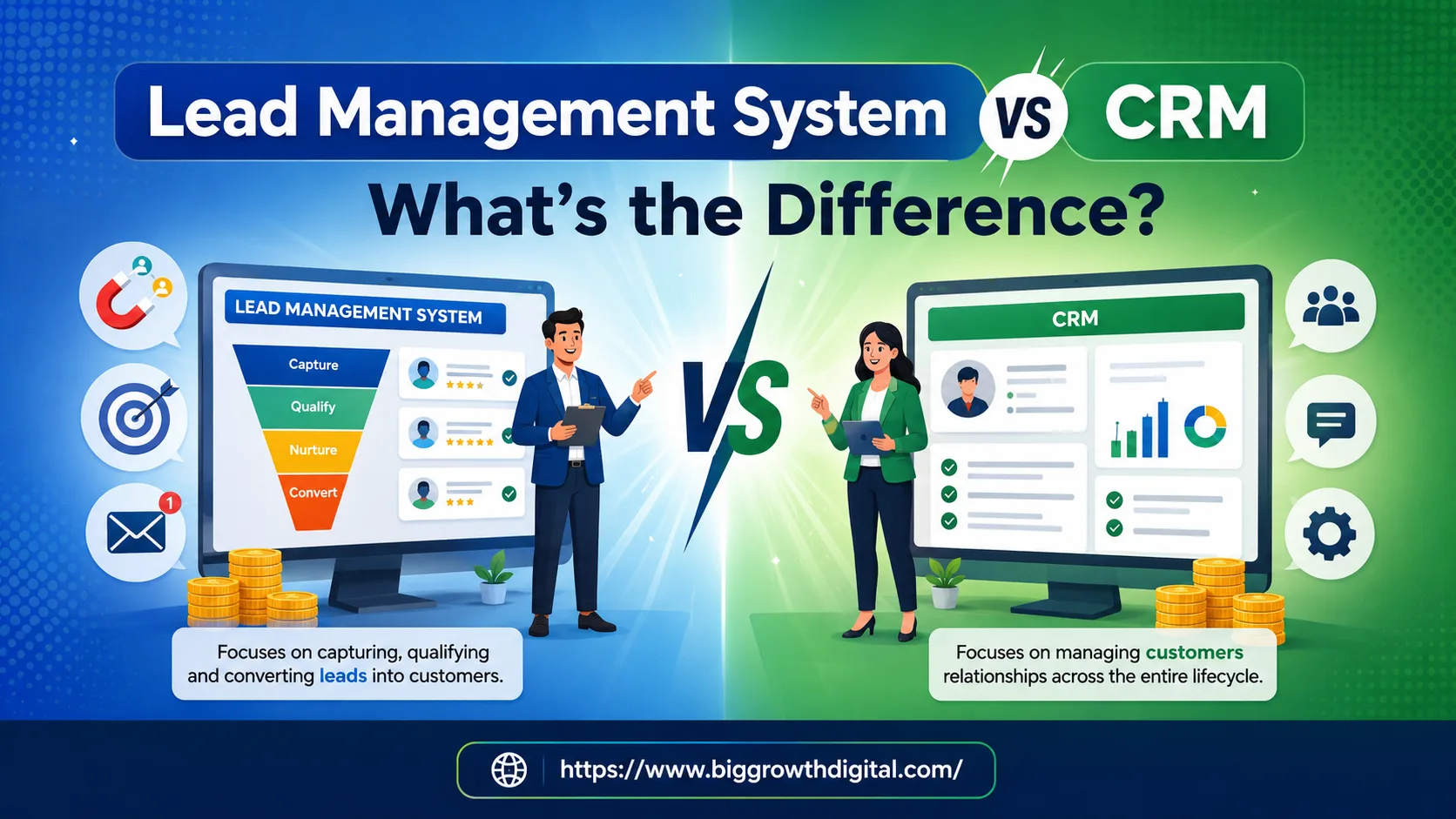
When evaluating sales tools, the lead management system vs CRM debate comes up constantly and understandably so. Both systems overlap in features, yet serve entirely different stages of the sales process.
This guide breaks down the core differences, so you invest in the right tool at the right time. Businesses often confuse lead management systems and CRMs because both tools overlap in functionality. However, they serve very different purposes at different stages of the sales funnel.
Most of the time they overlap, they integrate. So before you invest, let’s understand these terms clearly through this blog.
When you first read the term “Lead Management System” it is exactly what it sounds like, a tool built to capture, score, track, and nurture leads through your sales pipeline from first contact to conversion.
In short, a lead management system is software that works on a technology-driven framework and is used to capture, track, nurture, and qualify potential customers from their initial engagement until they convert into paying customers.
Now you are probably thinking, where does the lead management system help? It basically answers questions like:
With an LMS, you get a system that answers all these underlying questions.
CRM stands for Customer Relationship Management. It is a broader term compared to a Lead Management System.
CRM can be defined as a system, strategy, or software used to manage all company interactions with current and potential customers. It centralizes customer data, purchase history, communication, and contact information into a single platform to improve customer relationships, drive sales, and enhance customer service.
Sales pipeline management in a CRM context is less about chasing leads and more about nurturing existing relationships at various stages of the customer lifecycle.
| Features | Lead Management System | CRM |
|---|---|---|
| Primary Focus | Capturing and converting leads | Managing post-conversion customer relationships |
| Lead Scoring | Core feature | Limited |
| Sales Pipeline View | Visual kanban | Basic |
| Post-Sale Tracking | ✗ | Core feature |
| Setup Complexity | Low | High |
| Best Stage | Pre-conversion | Post-conversion |
| Stage in Funnel | Top to mid-funnel | Mid to bottom funnel and beyond |
| Key Users | Sales reps and lead generation teams | Account managers, customer success, and support teams |
| Core Strength | Lead tracking and follow-up automation | Customer history, retention, and upselling |
| Best For | High lead volume businesses | Businesses with large customer bases |
| Integration Needs | Ad platforms, forms, and landing pages | Billing, support tools, and email marketing |
Think of lead management software as the pre-CRM layer, and everything starts making sense.
It works like a relay race. Lead management software runs the first leg by capturing every inquiry, scoring leads based on quality, tracking follow-ups, and ensuring no prospect falls through the cracks. Once a prospect converts, the CRM takes over.
Businesses that skip this sequence often face a hidden cost: their CRM becomes filled with cold, unqualified, or poorly tracked contacts.
The result is messy pipelines, inaccurate reporting, and sales teams wasting time on bad data.
Before a lead becomes a customer, they first need to be captured, qualified, nurtured, and converted. That is the primary role of lead tracking software.
Once a lead converts into a customer, the CRM takes over with deeper and long-term relationship management.
For high-volume industries like real estate, B2B sales, or insurance, where lead volumes are high and follow-up cycles are long, this distinction between a Lead Management System and CRM becomes even more important.
For example, platforms like Bigestate are built around this exact flow, managing large volumes of property leads, tracking every follow-up, AI calling, WhatsApp automation, and ensuring every interaction is handled before conversion.
Sometimes businesses skip the lead management stage and jump directly to CRM software. As a result, data becomes incomplete and conversion rates underperform. That’s why the sequence matters.
Here are some of the most common mistakes businesses make while using CRM or lead management software:
Once a lead becomes a customer, CRM software starts playing its most important role.
Below are some of the major benefits of CRM after lead conversion:
In conclusion, the answer to the lead management system vs CRM debate is simple: businesses usually need both, just at different stages of the customer journey.
If leads are not converting, start with lead management software. If customers are not staying, invest in CRM software. And once both systems are in place, make sure they are integrated because disconnected workflows quietly lead to lost revenue.
Platforms like Bigestate combine both layers of lead tracking before conversion and relationship management after conversion, making them especially useful for high-volume industries like real estate.
The goal is simple: no lead slips away before conversion and no customer gets lost after it.
Q1. What is the difference between a lead management system and CRM?
A lead management system handles prospects before they convert by capturing, scoring, and tracking leads through the pipeline. A CRM takes over after conversion and focuses on managing customer relationships, upselling, and long-term communication.
Q2. What are the 4 types of CRM systems?
The four primary types of CRM systems are operational CRM, analytical CRM, collaborative CRM, and strategic CRM.
Q3. What is lead management software?
Lead management software helps businesses capture, track, nurture, and manage leads throughout the sales funnel until conversion.
Q4. Is WhatsApp a CRM?
WhatsApp itself is not a CRM, but businesses often integrate WhatsApp with CRM systems to manage leads, track conversations, and automate customer communication.
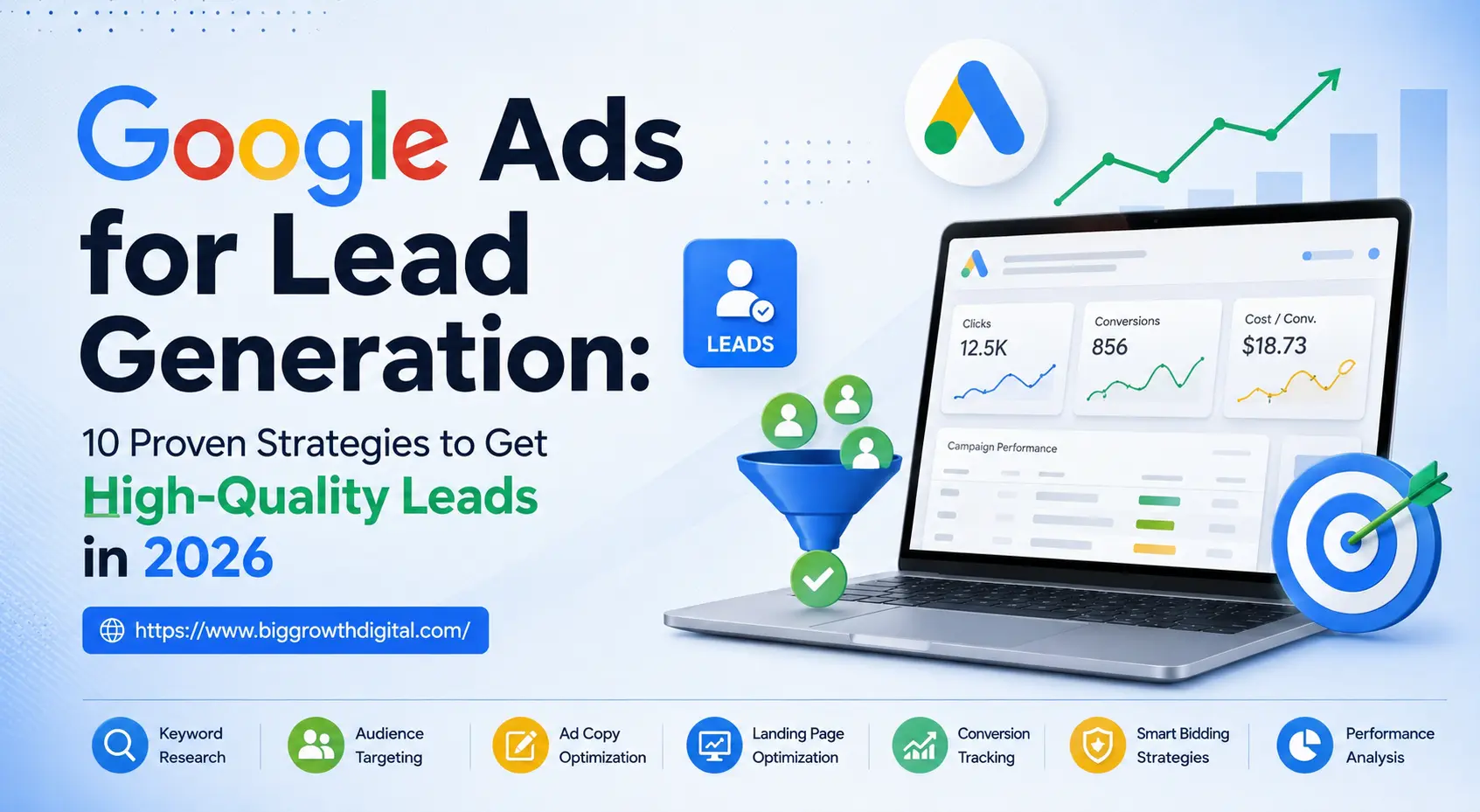
Discover 10 proven Google Ads lead generation strategies to improve conversions, reduce acquisition costs, optimize campaigns, and generate high-quality leads in 2026.
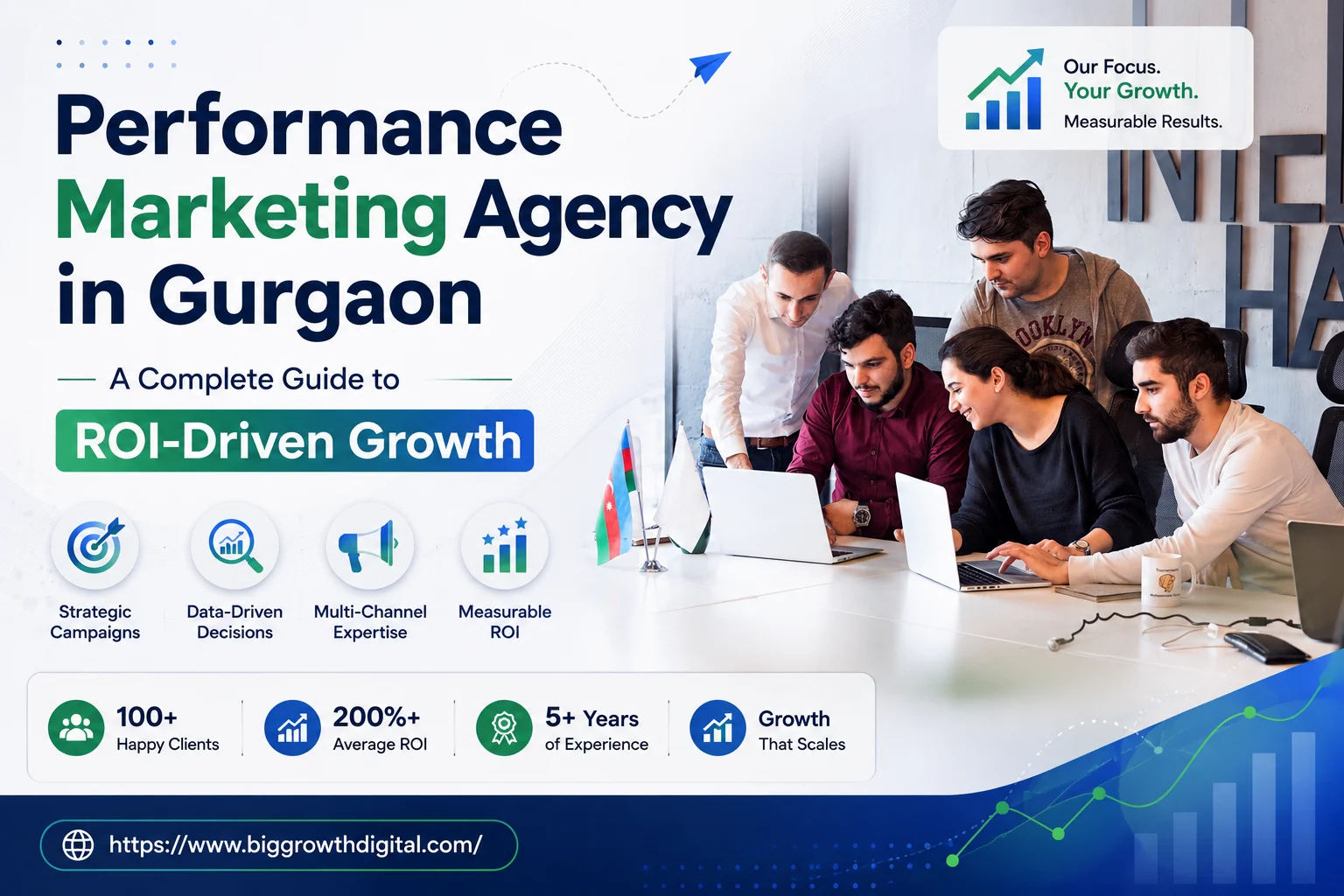
Learn how a performance marketing agency in Gurgaon helps businesses drive measurable ROI through PPC, SEO, CRO, analytics, and conversion-focused marketing strategies.
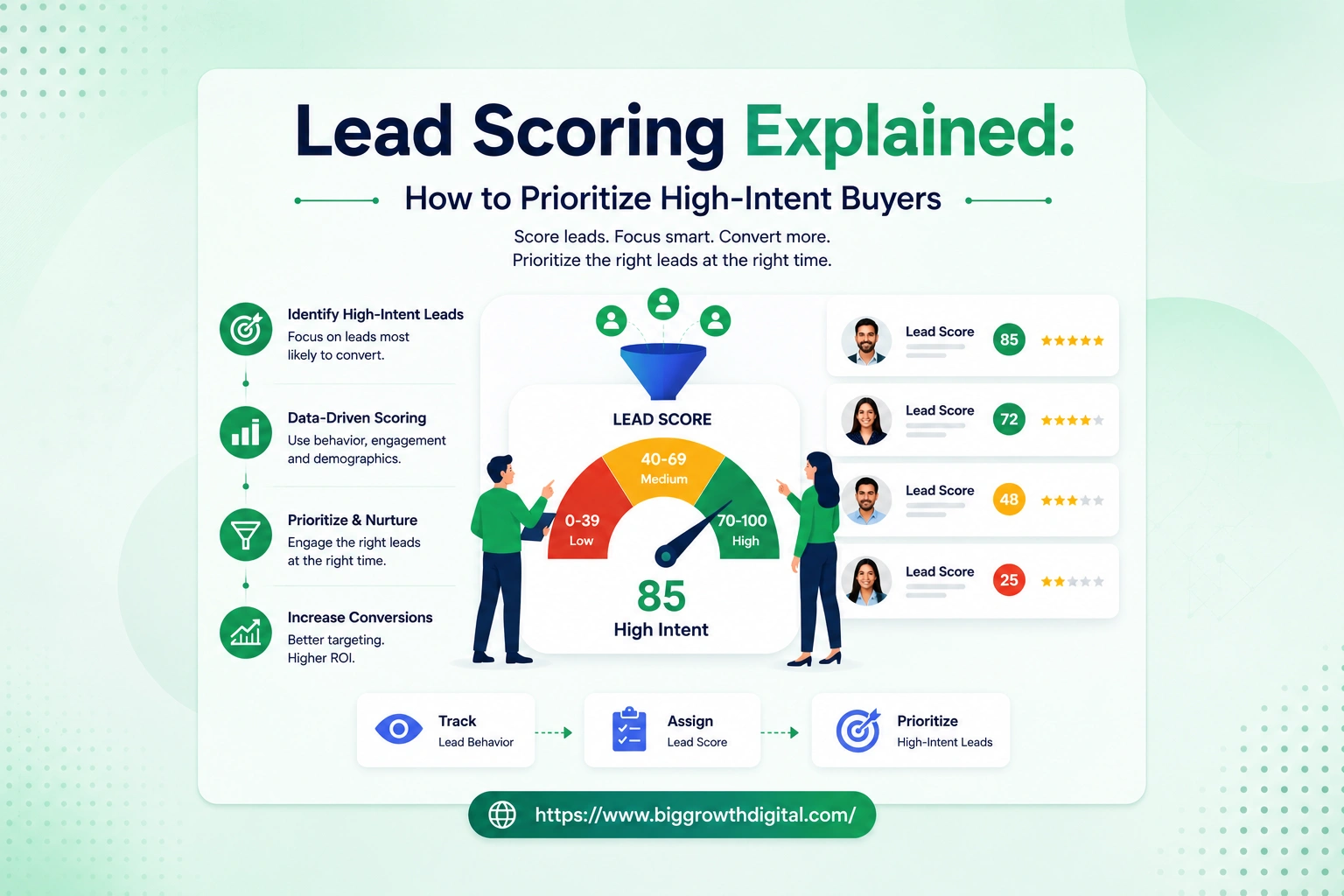
Understand how lead scoring works, why it matters, and how businesses can prioritize high-intent buyers using demographic data, behavioral tracking, automation, and predictive scoring models.
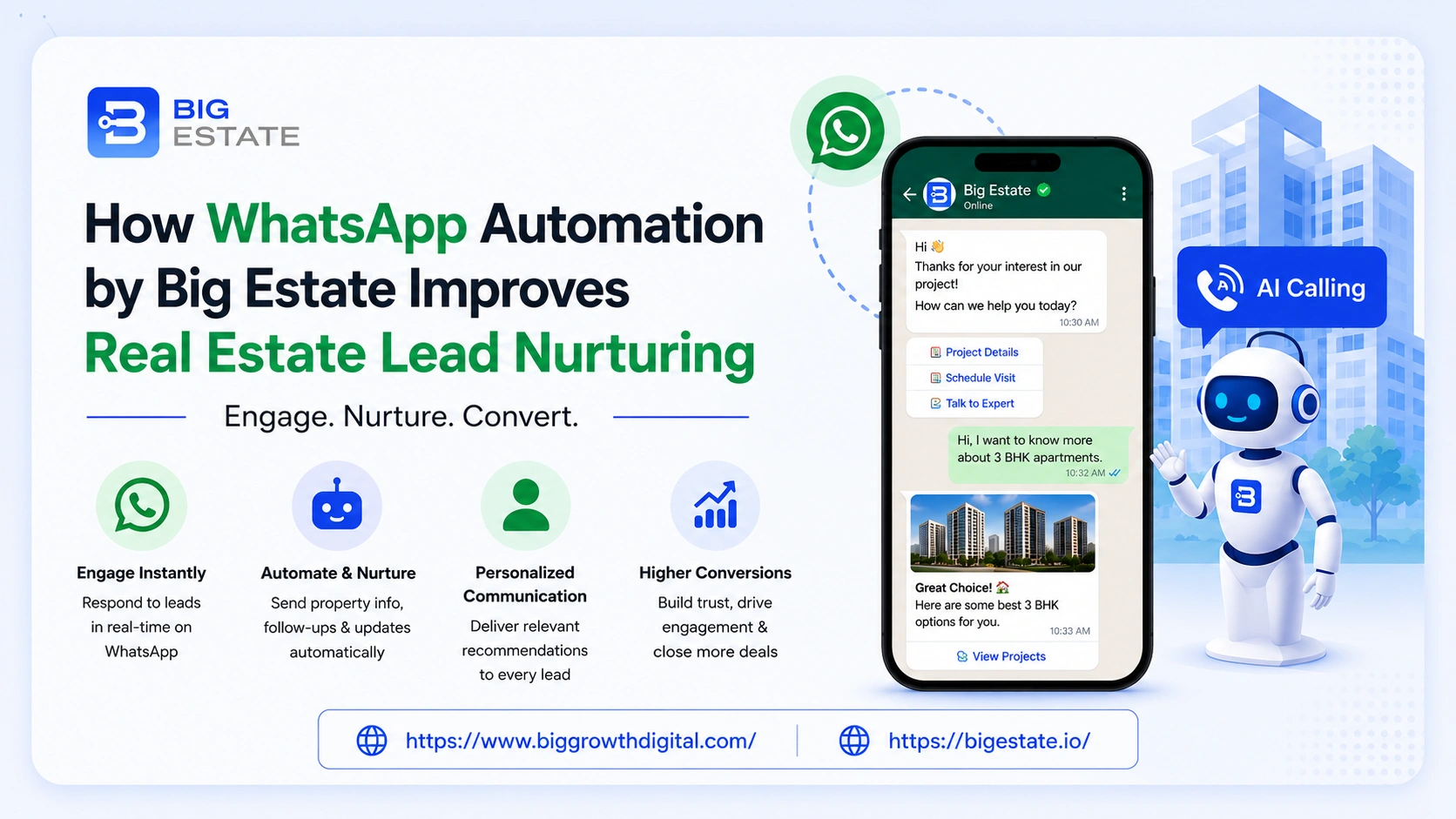
Discover how WhatsApp automation helps real estate companies improve lead nurturing, automate follow-ups, qualify leads, schedule site visits, and increase conversions through faster customer engagement.
Discover how AI is transforming real estate marketing through automation, predictive insights, and smarter lead generation — powering faster, more efficient campaigns.
.webp)
Explore how AI, automation, and data intelligence are redefining real estate marketing with smarter targeting, predictive analytics, and seamless automation.

Learn how CRM automation helps real estate teams convert faster by managing leads efficiently and ensuring no opportunity is missed.
.webp)